A General Duty Assistant (GDA) plays an important role in the smooth functioning of a hospital by supporting patients, nurses, and other healthcare professionals with essential day-to-day care activities. Understanding the General Duty Assistant duties in hospital settings is the first step for students who want to build a career in the healthcare industry.
From helping patients move safely to maintaining hygiene and assisting healthcare staff, GDAs contribute to patient comfort, safety, and overall hospital care. With suitable training and practical experience, this role can be a starting point for individuals interested in working in hospitals, clinics, nursing homes, and other healthcare facilities.
If you are looking to enter the healthcare field, learning about the GDA role can help you decide whether this career path is right for you.
What Is a General Duty Assistant (GDA)?
A General Duty Assistant is a healthcare support worker who assists patients with routine daily activities and helps nurses and other medical professionals with non-clinical and basic patient-care tasks.
GDAs work under the supervision of qualified healthcare professionals and follow the hospital’s procedures for patient safety, hygiene, infection prevention, and care.
Their primary responsibility is to help patients feel comfortable while supporting the healthcare team in delivering organised and efficient care.
A GDA does not replace a nurse or doctor. Instead, they provide essential support that allows qualified professionals to focus on assessment, diagnosis, treatment, and clinical decision-making.
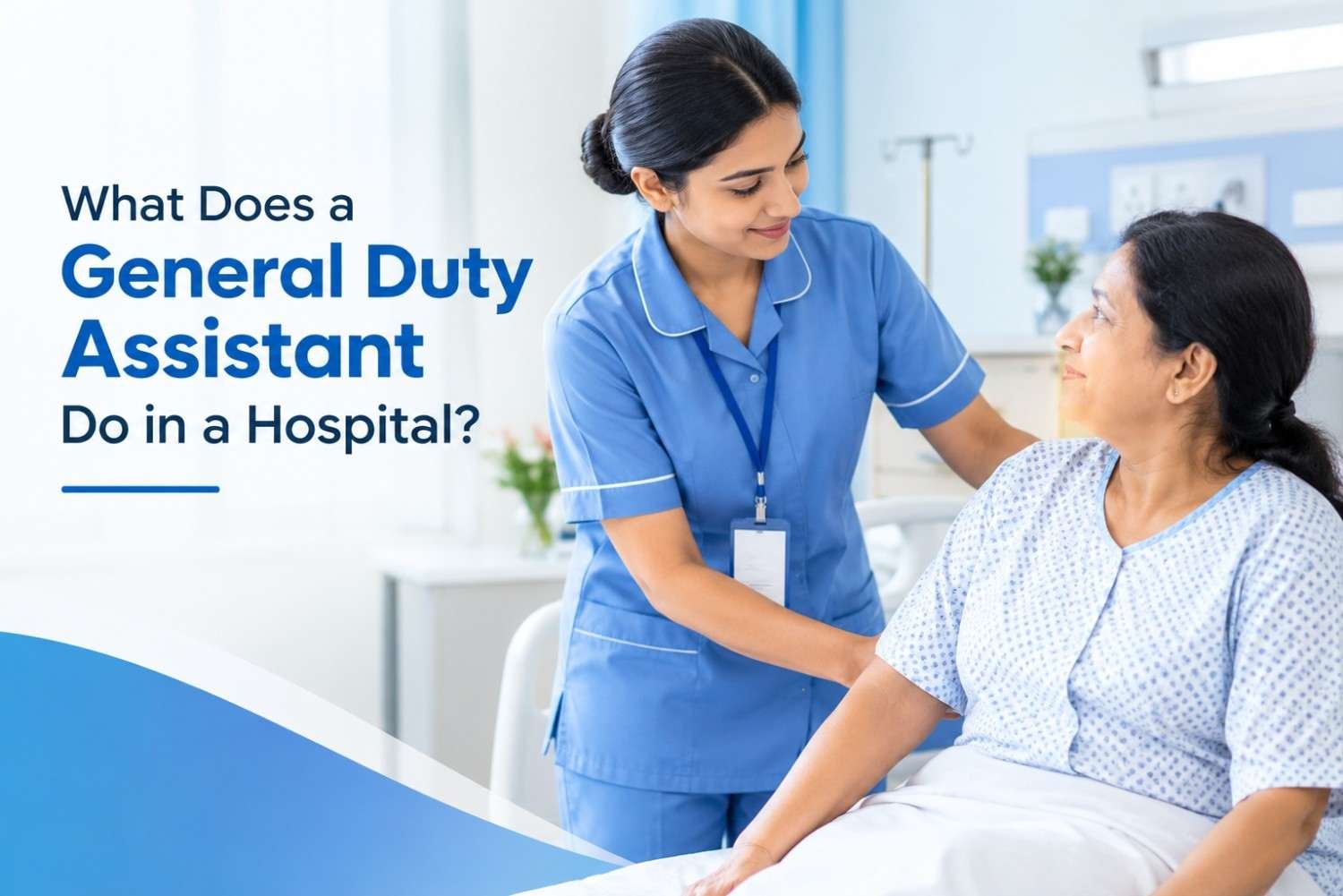
What Does a General Duty Assistant Do in a Hospital?
The daily responsibilities of a General Duty Assistant depend on the department, hospital policies, patient needs, and level of training.
Some of the main duties include the following.
1. Assisting Patients With Daily Activities
Many patients need support with routine activities during their hospital stay. A GDA may help patients with:
- Personal hygiene and grooming.
- Dressing and other daily activities.
- Eating and drinking, when permitted and appropriate.
- Changing positions in bed.
- Moving safely between the bed and a wheelchair, as trained.
- Maintaining comfort and dignity.
GDAs must respect patient privacy, cultural preferences, and individual needs while providing assistance.
2. Helping Patients Move Safely
Patients recovering from surgery, illness, or injury may require help moving around the hospital.
A General Duty Assistant may assist with walking, wheelchair transfers, and moving patients between designated areas, according to training and hospital instructions.
They must use appropriate safety techniques and equipment, seek assistance when necessary, and follow instructions from nurses or other authorised professionals.
3. Maintaining Patient Hygiene and Comfort
Cleanliness and personal hygiene are essential for patient comfort and infection prevention.
Depending on the patient’s condition and the facility’s protocols, GDA responsibilities may include:
- Helping maintain personal cleanliness.
- Changing bed linen and keeping beds tidy.
- Keeping patient surroundings clean and organised.
- Assisting with basic comfort measures.
- Reporting spills, hazards, or hygiene concerns to the appropriate staff.
These tasks help create a cleaner, safer, and more comfortable environment for patients.
4. Supporting Nurses and Healthcare Professionals
General Duty Assistants work as part of a larger healthcare team.
Their support may include preparing the patient’s surroundings, arranging basic care supplies, helping with patient movement, and communicating relevant observations to the nursing staff.
They may also assist with routine non-clinical tasks as assigned by the hospital.
Important: GDAs should not independently perform nursing procedures, administer medication, or undertake clinical tasks beyond their authorised training and responsibilities.
5. Following Infection Prevention and Hygiene Practices
Hospitals must follow strict infection prevention practices to protect patients, visitors, and healthcare workers.
A GDA is expected to follow established protocols, including:
- Performing hand hygiene at appropriate times.
- Using personal protective equipment (PPE) correctly.
- Following instructions for handling contaminated materials.
- Maintaining cleanliness in assigned areas.
- Following biomedical waste segregation procedures.
- Reporting potential infection risks and unsafe conditions.
Proper training in these practices helps GDAs contribute to a safer healthcare environment.
6. Observing and Reporting Patient Concerns
GDAs often spend time assisting patients with their daily needs, which means they may notice changes in comfort or behaviour.
They should promptly report concerns such as unusual discomfort, difficulty breathing, sudden weakness, a fall, or a noticeable change in the patient’s condition to the responsible healthcare professional.
A GDA’s role is to observe and communicate concerns—not independently diagnose medical conditions or decide on treatment.
7. Communicating With Patients and Families
Good communication is an important part of patient care.
General Duty Assistants should speak politely, listen carefully, explain routine assistance within their role, and treat patients and families with patience and respect.
They must also protect confidential patient information and direct medical questions to qualified healthcare professionals.
8. Helping Maintain a Safe Hospital Environment
GDAs contribute to patient safety by keeping assigned areas organised, identifying potential hazards, and following hospital procedures.
They may help ensure that frequently used items are available, patient pathways remain clear, and equipment is handled appropriately according to training.
They should also know how to report emergencies and follow the hospital’s emergency response instructions.
What Does a GDA’s Daily Routine Look Like?
A General Duty Assistant’s workday may vary depending on the hospital department and shift. A typical routine could include:
- Beginning the shift: Receive instructions from the supervising staff and understand assigned responsibilities.
- Preparing the care area: Check that the assigned patient surroundings are clean and organised.
- Assisting patients: Support personal hygiene, comfort, meals, and movement as required.
- Supporting the team: Help with permitted non-clinical tasks and patient transfers.
- Maintaining safety: Follow hand hygiene, PPE, and infection prevention procedures.
- Reporting concerns: Inform the appropriate healthcare professional about patient needs or safety issues.
- Completing handover: Communicate relevant information according to hospital policy before ending the shift.
This routine requires attentiveness, teamwork, punctuality, and a compassionate approach to patient care.
What Skills Are Required to Become a General Duty Assistant?
Students interested in a GDA career should develop practical skills as well as the right attitude toward patient care.
The most important skills include:
- Communication skills: Interacting clearly and respectfully with patients and healthcare staff.
- Compassion and empathy: Understanding that patients may be anxious, uncomfortable, or dependent on assistance.
- Personal hygiene awareness: Following cleanliness and infection prevention practices.
- Teamwork: Working effectively under the guidance of nurses and other healthcare professionals.
- Observation skills: Recognising concerns and reporting them promptly.
- Physical stamina: Managing routine duties that may involve standing, walking, and assisting with patient movement.
- Time management: Completing assigned responsibilities in an organised manner.
- Professionalism: Respecting patient privacy, confidentiality, dignity, and hospital rules.
These skills can be developed through structured training, demonstrations, supervised practice, and experience in healthcare environments.
What Qualifications Are Needed for a GDA Course?
Eligibility criteria for a General Duty Assistant course can vary depending on the training provider and the applicable qualification framework.
Students should check the specific course requirements before enrolling. Depending on the programme, eligibility may include educational qualifications, age requirements, and other admission conditions.
A structured GDA training programme generally focuses on areas such as:
- Introduction to healthcare and hospital environments.
- Basic patient care and comfort.
- Personal hygiene and patient assistance.
- Infection prevention and control.
- Biomedical waste management.
- Communication and professional conduct.
- Patient safety and emergency awareness.
- Practical skills relevant to the GDA role.
Practical training is particularly valuable because it helps students understand how to apply classroom knowledge in real-world healthcare settings.
What Are the Career Opportunities After GDA Training?
After completing appropriate training, gaining the required certification where applicable, and meeting an employer’s requirements, GDA trainees may explore entry-level healthcare support opportunities.
Potential workplaces include:
- Multispecialty hospitals.
- Private and community hospitals.
- Nursing homes.
- Clinics and healthcare centres.
- Rehabilitation facilities.
- Long-term care facilities.
- Other healthcare organisations requiring trained patient-care support staff.
The specific duties and job titles depend on the employer, qualification, experience, and local requirements.
Can a GDA Build a Long-Term Healthcare Career?
Yes. GDA training can provide a foundation for entering the healthcare support field.
With further education, relevant experience, and additional qualifications, individuals may explore other healthcare-related roles for which they meet the eligibility requirements.
However, progression into regulated clinical professions, such as nursing, requires the appropriate separate qualifications and registration where applicable. A GDA certificate alone does not qualify someone to practise as a nurse.
Why Choose GDA Training at SPAW Academy, Mohali?
Choosing the right training institute is an important step toward beginning a healthcare career.
SPAW Academy, located at SPAW Hospital, Sector 70, Mohali, offers career-focused healthcare training for students interested in developing practical skills for the healthcare sector.
Students exploring the General Duty Assistant course can enquire about the available programme, admission requirements, course curriculum, practical learning opportunities, and applicable certification.
Reasons to consider SPAW Academy include:
- Healthcare-focused vocational training.
- Exposure to practical learning opportunities, subject to programme arrangements.
- Training in patient care and hospital-related skills.
- Guidance on professional conduct and workplace expectations.
- A convenient location in Sector 70, Mohali.
- Information about available GDA, EMT, and OT Technician courses.
Before enrolling, ask the academy about the current course duration, eligibility, fees, certification, practical training arrangements, and placement support, if available.
Visit the SPAW Academy website to learn more about the available healthcare training programmes.
Who Should Consider a General Duty Assistant Course?
A GDA course may be suitable for individuals who:
- Want to start a career in healthcare support.
- Have an interest in helping patients.
- Prefer practical, skill-based vocational training.
- Want to understand hospital routines and patient-care responsibilities.
- Are looking for entry-level opportunities in the healthcare sector.
- Want to develop communication, teamwork, and patient-care skills.
Students should review the course’s eligibility requirements and understand the responsibilities involved in providing patient support before making an admission decision.
Frequently Asked Questions (FAQs)
1. What is the main duty of a General Duty Assistant in a hospital?
The main duty of a GDA is to support patients with routine daily activities, comfort, hygiene, and safe movement while assisting the healthcare team with assigned non-clinical tasks.
2. Is a General Duty Assistant the same as a nurse?
No. A General Duty Assistant provides healthcare support under appropriate supervision, whereas a qualified nurse has professional responsibilities that include nursing assessment, care planning, and clinical procedures within their scope of practice.
3. What is taught in a GDA course?
A GDA course may cover basic patient care, personal hygiene, infection prevention, patient safety, communication, professional conduct, biomedical waste management, and practical patient-assistance skills. The exact curriculum depends on the programme.
4. Where can a trained General Duty Assistant work?
Depending on their qualifications and the employer’s requirements, trained GDAs may find opportunities in hospitals, nursing homes, clinics, rehabilitation facilities, and other healthcare settings.
5. Is practical training important for GDA students?
Yes. Practical learning helps students develop patient-care skills, understand hospital routines, follow safety protocols, and prepare for the responsibilities expected in healthcare support roles.
6. Where can I enquire about GDA training in Mohali?
You can contact SPAW Academy, Sector 70, Mohali, to enquire about the available General Duty Assistant training programme, eligibility, fees, and admission process.
Visit: https://spawacademy.com/
Start Your Healthcare Journey With SPAW Academy
A General Duty Assistant plays an important role in supporting patients and helping hospitals provide organised, compassionate care. From maintaining patient comfort to following hygiene protocols and assisting healthcare professionals, the role requires practical skills, responsibility, and empathy.
If you want to explore a career in healthcare, learning the fundamentals of patient care can be a valuable first step.
Take the first step toward your healthcare career with SPAW Academy, Sector 70, Mohali.
Enquire Now: 78377 49294/ 8360228569
Location: SPAW Academy, SPAW Hospital, Sector 70, Mohali, Punjab
Website: https://spawacademy.com/
Contact SPAW Academy to confirm current GDA course availability, admission eligibility, fees, duration, and certification details.